

Mat guide
How to choose the right sleeping mat?
A sleeping mat is the foundation of your outdoor sleep system. It insulates you from the cold ground, provides comfort on uneven surfaces, and supports better rest after long days on the trail.
Choosing the right mat involves balancing warmth, weight, materials and construction - and matching these to your style of adventure. This guide walks through the full Robens range, helping you understand the strengths of self-inflating, inflatable and foam mats, while highlighting key features such as materials, R-values, valve technology, and long-term maintenance.

Understanding the three main types of sleeping mats
Self-inflating mats
Self-inflating mats combine an open-cell foam core with an airtight outer fabric. When the valve is opened, the foam expands and draws air into the mat, giving a balance of comfort, convenience and reliable insulation.
Robens self-inflating models such as the Campground and Air Impact series use vertical foam cores to reduce weight and pack size while maintaining stability. The sturdy construction and durable polyester shells (75D 190T polyester in the Campground series) make these mats dependable for general camping and 3-season use.

Mats like the Polarshield and Iceshield series use an innovative construction where small vertical cutouts reduce weight and create rounded air pockets that increase insulation and add extra height for comfort. This eliminates cold spots and keeps weight down, while the 3D sidewalls provide full use of the mat’s surface. All models use a tough, lightweight 20D 390T double-ripstop nylon shell for durability.
Inflatable mats
Inflatable mats use air chambers rather than foam for cushioning and insulation. They offer the very best weight-to-comfort ratio and pack extremely small - perfect for trekking, bikepacking and ultralight travel.
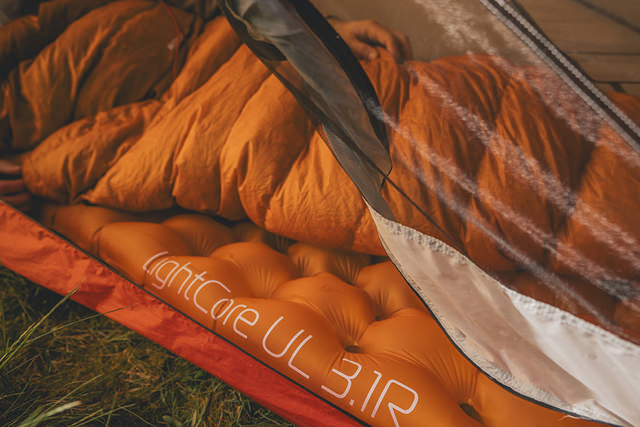
The LightCore UL and HeatCore series rely on advanced foil insulation layers inside the air chambers. One, two or three layers of reflective foil reduce radiant heat loss, resulting in strong R-values at very low weight - for example, the LightCore UL 3.1R weighs just 295 g with an R-Value of 3.1. These mats use ultralight ripstop nylon shells (15D or 20D) and horizontal baffles that help the mat conform to your body for stable support.
Inflatable mats are ideal for users who prioritise minimal pack size, high comfort and excellent warmth-to-weight performance.

Foam Mats
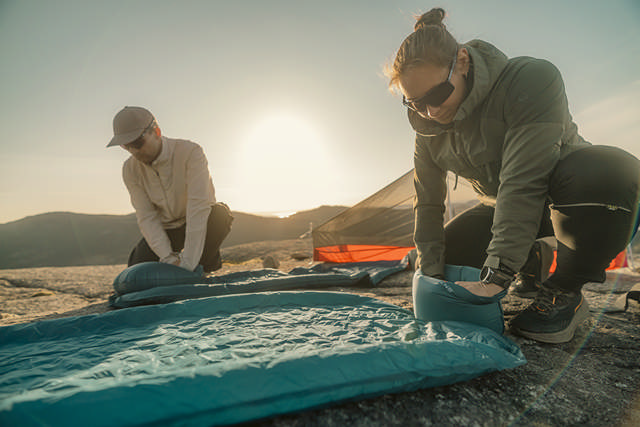
Closed-cell foam mats are the simplest, most durable and most reliable option. They cannot puncture, absorb very little water, and work in all conditions.
The Robens ZigZag and Slumber ranges use high-quality IXPE or EVA foam with non-absorbent construction for long life. Some models include foil layers to reflect body heat back to the user, boosting insulation (e.g., ZigZag Slumber Pro with a foil finish).
Foam mats are excellent for multi-use, high-durability situations, winter layering, emergency backup, and ultralight setups where reliability outweighs comfort.


Materials and fabrics
Across the entire range, Robens selects materials for the right balance of weight, durability and performance.
Ultralight nylon ripstop fabrics in the 15D–20D range are commonly used where low weight and packability are essential. Despite their minimal weight, these tightly woven nylon materials provide strong tear resistance and dependable durability on demanding trips.
Heavier polyester fabrics such as 75D 190T offer increased robustness and long-term reliability. Their thicker weave stands up well to abrasion, making them ideal for repeated use, car camping and situations where toughness matters more than ultralight performance.
Closed-cell foams like IXPE, EVA and XPE deliver simple, non-absorbent insulation that works in all temperatures. These foams retain heat effectively, cannot puncture and stay reliable even in wet or rough conditions, making them suitable for both standalone use and layering beneath other mats.
Inflatable mats often incorporate TPU laminations to create airtight, delamination-resistant chambers. This construction improves long-term durability, especially in extreme environments where consistent air retention and structural integrity are crucial.
Across all constructions, Robens mats are produced with PFAS-free materials, ensuring water-resistant performance without relying on environmentally harmful chemical treatments.

Construction: What makes a mat comfortable and warm
Mat construction plays a major role in warmth, weight and comfort.
Vertical and offset cutouts
Some inflatable mats use small vertical and offset cutouts in the internal structure to remove excess material and create lightweight air channels. These rounded air pockets help eliminate cold spots and add extra loft at the sides, increasing comfort without adding unnecessary weight.

Horizontal baffles
Horizontal air chambers distribute pressure evenly across the mat, creating a stable sleeping surface that adapts to the body. This design improves support, reduces rolling and enhances overall comfort for a wide range of sleeping positions.
3D sidewalls
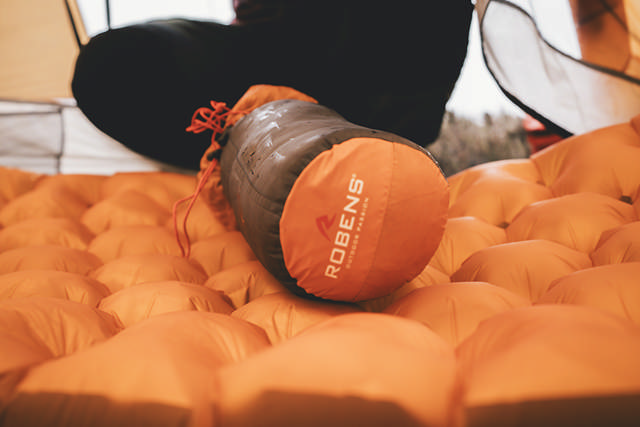
Mats with 3D sidewalls feature vertical edges rather than tapered sides. This construction maximises the usable surface area, making the mat feel wider and more supportive while improving stability during movement at night.
Foil insulation layers
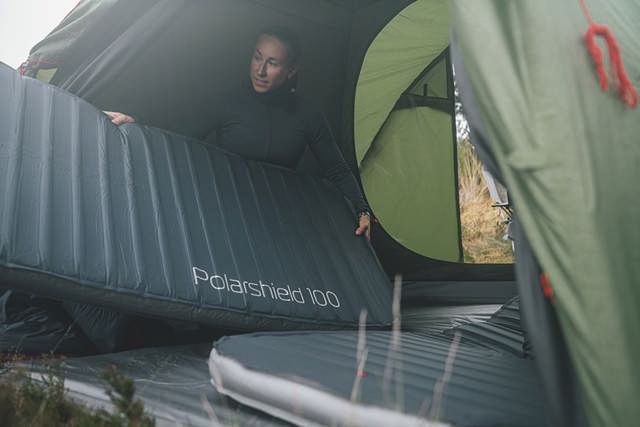
Reflective foil layers inside air mats act as radiant barriers by reflecting body heat back toward the sleeper. One or more layers can be used depending on the required warmth level, significantly increasing insulation without adding extra weight or bulk.

Closed-cell foam profiles
Closed-cell foam mats often incorporate shaped surface patterns, such as folding profiles or half-dome structures, to reduce packed volume while maintaining cushioning and structural integrity. Some versions include heat-reflective foil to enhance insulation by reducing radiant heat loss.

R-values and choosing the right level of insulation
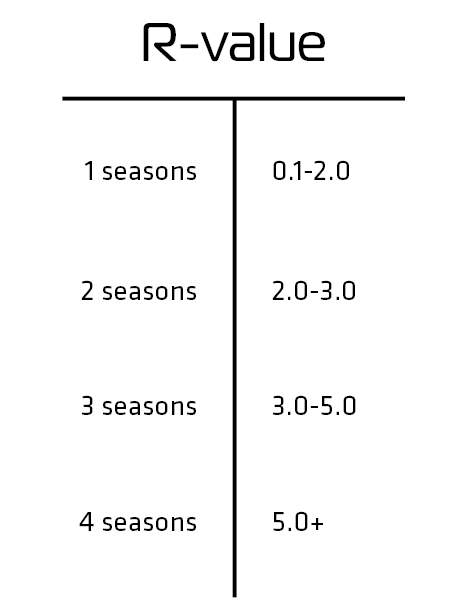
R-value is the industry standard for measuring how well a sleeping mat resists heat loss to the ground. The higher the number, the better the insulation. Because the cold ground pulls heat away from the body far more efficiently than the surrounding air, a mat’s R-value is just as important as the temperature rating of your sleeping bag. In fact, many users experience cold nights not because of their bag, but because their mat provides insufficient ground insulation.
Modern testing methods provide consistent, lab-verified R-values, making it easier to compare mats across brands. R-values stack, meaning you can combine mats - for example, a foam mat under an air mat - to achieve a higher total insulation value during cold-weather trips.
When choosing a sleeping mat, always base your decision on the lowest ground temperature you expect to encounter, not just the air temperature. A warm sleeping bag cannot compensate for an under-insulated mat, but the right R-value will significantly improve comfort, warmth and overall sleep quality. For cold climates or multi-season versatility, consider pairing two mats to achieve a higher combined R-value while improving redundancy and durability.
Robens Peak Valve Technology
A standout feature across the inflatable and self-inflating range is the Robens Peak Valve, designed for high airflow, easy operation and reliable sealing.
Robens Peak Valve features:
- One-way inflation to prevent air from escaping as you blow or pump
- Fast deflation when fully opened
- A low-profile shape that reduces snagging and improves packability
Many mats also come with lightweight pump sacks that allow hygienic inflation, especially in cold conditions where breath moisture can reduce insulation.
All Robens pump sacks and electric pumps are adaptable with Robens Peak Valve.

Storage, care and long-term maintenance
Proper care increases performance and extends the lifespan of any sleeping mat.
Inflatable and self-inflating mats
Store them unrolled with the valve open when possible, allowing moisture to escape and the foam to rest at full loft. Avoid compressing inflatables long-term. Keep mats clean and dry, and avoid prolonged exposure to heat or direct sunlight. For self-inflators, this also helps the foam retain its expansion ability.
Foam mats
Closed-cell foam requires minimal care. Store loosely and avoid heavy objects that can create permanent dents.
General maintenance
Clean mats with mild soap and lukewarm water. Allow them to dry thoroughly before storage.
Always patch small punctures promptly using a repair kit.
With proper care, Robens mats provide many years of comfort and dependable insulation across all seasons.
Chosing the right mat for your adventure
A sleeping mat is more than simple cushioning! It is a key part of your warmth, recovery and comfort outdoors.
Whether you choose the rugged simplicity of a foam mat, the reliable balance of a self-inflating model, or the ultralight performance of an inflatable design, the Robens range offers precise solutions for every adventure. Understanding materials, constructions, R-values, valve systems and storage methods ensures you pick the right mat for your needs - and sleep soundly wherever the trail takes you.